
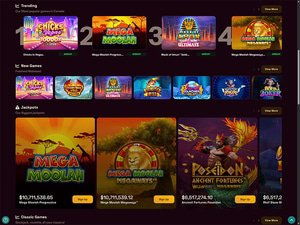
Safer online gambling starts with control rather than confidence about outcomes. Before using casino online grizzlys quest, Canadian adults should understand which account tools can limit spending, interrupt long sessions and support a deliberate decision to stop. The available controls are useful only when they are chosen before pressure builds. They also work best alongside personal rules about money, time and emotional state. This guide explains how to use the main responsible gambling tools, what each one can and cannot do, and when outside support may be the better next step.
Choose a limit before making a deposit
A deposit limit is one of the clearest ways to define a gambling budget in advance. The source material describes daily, weekly and monthly deposit-limit settings in the banking or account area. These controls concern money added to the account, not necessarily the total amount wagered. A player could deposit once and continue playing with the same balance, so a deposit limit should be treated as one part of a wider plan rather than a complete spending guarantee.
Set an amount that would be affordable to lose without affecting rent, groceries, debt payments, savings or other essentials. A practical approach is to decide the maximum gambling budget for the month, divide it into smaller periods if helpful, and avoid raising the limit because of a losing streak. If the account offers several time periods, a monthly ceiling can provide a broader boundary while daily or weekly limits add shorter checkpoints.
Review the wording displayed in the account before confirming a limit. The material does not establish exact cooling-off periods, change restrictions or whether a lower limit takes effect immediately in every situation. Do not assume that a requested increase becomes active at once, or that a lower figure automatically reverses recent spending. Keep a separate personal record of deposits and withdrawals so the account setting is not your only view of the budget.
Use session reminders to interrupt automatic play
Time can disappear when games are fast, visually stimulating or played on a phone. Session reminders are intended to interrupt that pattern by showing how long a player has been active. The available information confirms that session reminders are among the responsible-gambling tools, but it does not establish the exact interval options or the wording of each alert. Read the on-screen instructions instead of assuming the reminders function as a forced stop.
When a reminder appears, pause before selecting another game or dismissing it. Check the clock, your remaining budget and your original reason for playing. If the session has lasted longer than planned, close the gambling page and do something away from the screen. A reminder is more useful when it leads to an action, such as taking a walk, preparing food or messaging someone, rather than becoming another notification that is routinely ignored.
Browser access can make gambling available in many places, including during breaks or late at night. Consider adding personal boundaries that the website tool may not cover: no play while working, driving, drinking or feeling distressed; no sessions after a set bedtime; and no gambling to recover a loss. The Responsible Gambling Council’s information resources can provide broader Canadian context, but they do not replace checking the account’s own settings and terms.
Know when self-exclusion is the appropriate step
Self-exclusion is stronger than a deposit limit or reminder. It is designed for someone who wants to stop access for a period or who no longer feels able to keep gambling within personal boundaries. The source material identifies self-exclusion as an available control, while noting that requests and some other restrictions may require contact with support. The exact duration, process and account consequences should therefore be confirmed directly in the responsible-gambling section or Help Centre.
Consider self-exclusion if you repeatedly increase limits, return immediately after deciding to stop, hide gambling from people close to you, borrow money, miss obligations or feel distressed after playing. You do not need to wait for a particular financial loss before taking action. A temporary break can also be appropriate when gambling is interfering with sleep, relationships, work or study, even if the account balance appears manageable.

Prepare before making the request. Withdraw or document any balance according to the stated account process, save transaction records, and remove saved payment details where possible. Do not create another account or move to a different gambling service to bypass the restriction. If urges feel difficult to manage, tell a trusted person and seek professional support. A website-based exclusion is a practical barrier, not a substitute for help with stress, debt or compulsive behaviour.
Match the tool to the warning sign
Different controls address different problems. A deposit limit is most relevant when spending is drifting upward. A session reminder suits play that lasts longer than intended. Self-exclusion is more appropriate when moderation attempts repeatedly fail. Using every control at once is not always necessary, but selecting the weakest option when the warning signs call for a stronger one can create false reassurance.
Use this simple decision check before playing:
- Budget pressure: set a firm deposit boundary and do not use essential funds.
- Lost track of time: activate reminders and define a short, fixed session.
- Chasing losses: stop the session rather than increasing the budget.
- Repeated broken promises to stop: request self-exclusion and seek support.
- Emotional distress or intoxication: postpone gambling completely.
These steps are safeguards, not predictions about results. No limit improves odds, changes a game’s mathematics or guarantees that a planned session will remain enjoyable. Short-term wins can also make control problems less visible by encouraging longer play. Reassess the decision after a neutral break, not immediately after a win or loss. If you cannot follow your own boundary, treat that as information that a stronger restriction is needed.
Check local access and account information carefully
Responsible gambling tools operate within account and jurisdictional conditions. The supplied information says access and controls are subject to local age and residency rules, and that promotional availability differs by province. It also states that the service is not registered with iGaming Ontario and that promotions are described as unavailable to Ontario residents. These points do not determine every player’s eligibility, so provincial requirements and the current operator terms should be checked before using the account.
Keep responsible-gambling information easy to find. Review the account area, Help Centre and terms to identify how limits are set, how exclusion requests are made, and whether support must process a particular request. Save confirmation messages or reference numbers for any restriction. If a control does not appear, fails to work as expected or is difficult to cancel, stop playing and contact support rather than assuming it has been applied.
Privacy and safety matter as well. Use a unique password, protect access to the device and avoid allowing another person to gamble through your account. Account security problems can undermine personal limits and create confusion about transactions. Finally, treat gambling as paid entertainment with a defined cost, never as income or a way to solve financial problems. When the activity stops feeling optional, taking a complete break and seeking independent help is the safer decision.
Questions about safer gambling controls
Can a deposit limit prevent all gambling losses?
No. A deposit limit restricts how much money is added during the selected period, but it may not control an existing balance, winnings or play on other services. Set a personal loss budget as well, track transactions independently and stop if you feel pressure to raise the limit or chase losses.
What should I do if a session reminder is easy to ignore?
Treat that as a sign that a reminder alone is insufficient. End the session manually, leave the device and consider a stricter deposit boundary or self-exclusion. If stopping feels difficult, tell someone you trust and contact an appropriate gambling-support service rather than relying only on account notifications.
Does self-exclusion remove the need for outside support?
No. Self-exclusion can reduce access, but it does not address stress, debt, relationships or habits that may contribute to gambling. Use it as a practical barrier while seeking support if gambling feels difficult to control. Keep confirmation of the request and avoid opening another account to bypass it.